China Tourist Traps & Scams to Avoid
Affiliate Disclosure: This guide contains affiliate links — for VPN services (NordVPN, ExpressVPN, Surfshark), eSIM providers (Airalo), travel activities (Klook), and travel insurance (SafetyWing). If you click a link and make a purchase, we earn a small commission at no extra cost to you. We only recommend products we have personally tested. This does not influence our editorial ratings or rankings.
Classic scams — still highly active in 2026
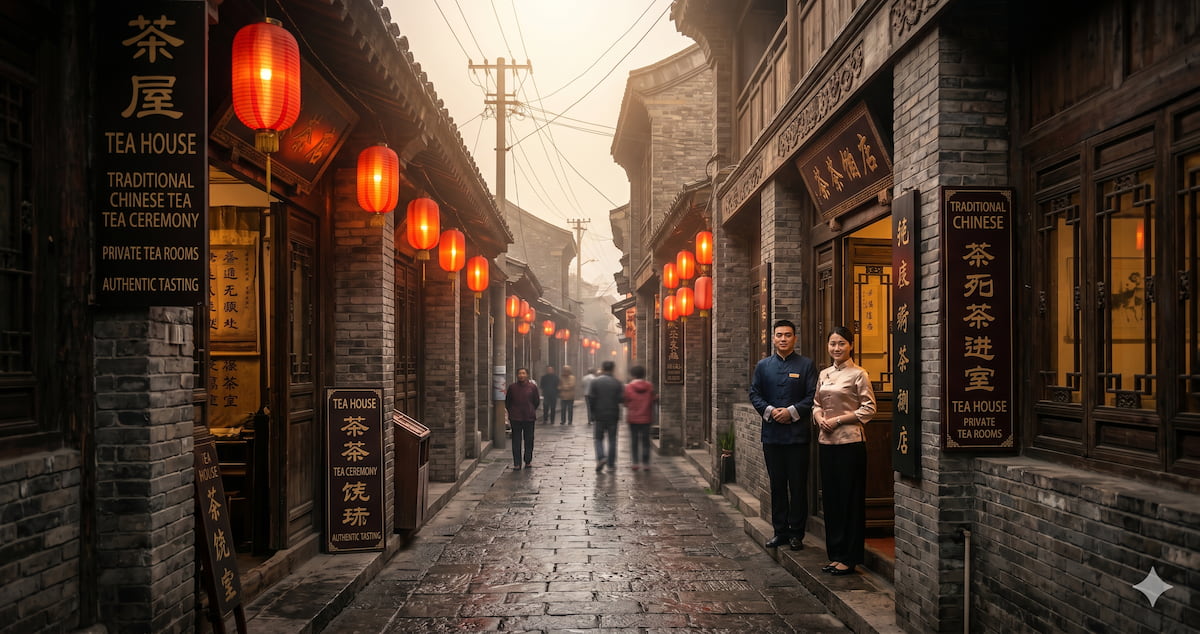
The teahouse and art gallery scam
The setup: A stranger approaches posing as someone wanting to “practice English,” an “art student,” or even someone claiming to be from your hometown. They invite you to a teahouse or gallery run by “a friend.” After tea or a brief tour, you’re handed a bill of ¥300–¥2,000 per person and pressured to pay on the grounds that “you’ve already consumed it.”
Hotspots: Beijing’s Wangfujing, Qianmen, and around the Forbidden City; Shanghai’s Yu Garden and Nanjing Road; the area around Xi’an’s Muslim Quarter.
Defense: Real art school exhibitions are not held on street corners. Real locals don’t recruit strangers to tea ceremonies. If someone you’ve just met is unusually enthusiastic about showing you somewhere, it’s the setup.
Unlicensed taxi and overcharging scams
The setup: Drivers solicit passengers at airports, rail stations, and tourist sites. They refuse to use the meter and quote inflated prices — typically 3–10× the standard fare. Some take deliberate detours or raise the price mid-ride.
Escalation: The driver may claim the attraction you’re heading to is “closed today” or “under repair,” then take you to a different “better” site or shopping centre where they collect a kickback.
Defense: Always use DiDi. Never get into any vehicle whose driver approached you first. The official taxi queue at airports and stations is safe — the kerb-side tout is not.
Fake tour guides and day-tour scams
The setup: Vendors at the entrance to popular sites sell “low-cost day tours” that supposedly include admission, transport, and a guide. In practice, the itinerary is loaded with mandatory shopping stops and forced purchases. In some cases the tour never enters the main attraction — it only views it from outside.
Hotspots: Beijing’s Badaling Great Wall, Xi’an’s Terracotta Warriors, Guilin’s Li River, Zhangjiajie, and similar high-traffic destinations.
Defense: Book tours only through the attraction’s official website, your hotel concierge, or established platforms (Trip.com, Klook). Any guide who approaches you at the gate is almost certainly operating a shopping-commission model. (Affiliate link)
Temple incense scams
The setup: At or near a temple, someone offers you a “free” stick of incense, then leads you to a “master” for a fortune reading. The master announces you face misfortune and that only premium incense (¥200–¥3,000) can resolve it.
Defense: Refuse all unsolicited incense. Real temple staff do not approach tourists outside the grounds. Any “master” who initiates contact is not affiliated with the temple.
Newer scams — 2025–2026
Hidden fees at “instagrammable” locations
The setup: Social media promotes a “free, must-photograph location.” Once you arrive, reaching the actual scenic core requires premium tickets, a sightseeing shuttle, or a boat fare. The location may also look nothing like the photographs — every widely-shared shot relied on filters and editing.
Example: An “ancient town” advertised as free admission charges ¥30 to climb a tower, ¥50 for a performance, and ¥80 for a boat ride. You spend ¥300+ to see roughly an hour’s worth of genuine attraction.
Defense: Before visiting any “viral” location, search for recent visitor reviews on Dianping — not the social media post that promoted it.
Souvenir price gouging
The setup: Shops near tourist sites sell vastly overpriced, low-quality goods at a significant premium. The “wild kiwi fruit jerky” sold at the foot of Huangshan is saccharine-soaked radish. The “ancient-method snowflake silver” sold in Lijiang’s old town frequently has lead levels above safe limits, and the fair market price is roughly 30% of what’s asked.
Defense: Don’t buy expensive souvenirs at tourist sites. For genuine local products, go to a major supermarket or a reputable e-commerce platform. Jade, silver, and tea purchased at tourist-area stalls should be considered decorative at best.
Food street price traps
The setup: The famous food streets in heavily touristed cities sell overpriced, mediocre “Instagram-famous” snacks. Chengdu’s Kuan Zhai Alley charges ¥15 for three sān dà pào glutinous rice balls. A “seafood platter” at the Qingdao Beer Festival is listed at ¥298 and turns out to be two crabs and a pile of shells.
Defense: Treat food streets as a sightseeing experience, not a meal. For real local food at fair prices, walk two streets away from the tourist corridor and look for the places full of locals.
Unrealistically cheap tour packages
The setup: Offerings like “¥99 three-day Guilin tour” or “¥199 all-island Hainan tour” are priced well below cost. The actual itinerary includes 2–3 mandatory shopping stops per day, with the operator recovering its costs through forced purchases and paid add-ons. As of 2026, this model has migrated from physical storefronts to livestreaming platforms, short-video apps, and social-media group chats.
The mechanism: This is the “zero-fee tour” model. The travel agency takes a loss on the booking and recovers it through shopping kickbacks — guides receive no base salary and survive entirely on commission. The tour is not cheap; the cost has been transferred to you through purchases you’ll feel pressured to make.
Defense: If a tour price seems impossible, it is. Any multi-day tour priced below ¥300 per person involves a shopping-commission model.
How to handle a scam in progress
Forced spending at a teahouse, gallery, or shop
- Stay calm. Physical confrontation is rare — the other side is relying entirely on psychological pressure.
- Refuse the full bill. State clearly that you were not informed of the price and will only pay a reasonable amount.
- Offer a token goodwill payment. Volunteer ¥50–¥100 for the tea or service, then prepare to leave.
- Document everything. Photograph the shop, the bill, and the scene.
- Call the police if they block the exit. Say bàojǐng (报警 — “call the police”) loudly and dial 110. In China, police prioritise disputes involving foreign visitors.
- File a complaint afterward. Use the 12345 hotline or the National Cultural and Tourism Market online complaint system (details below).
Taxi overcharging
- Refuse the inflated fare. State that you will only pay the DiDi standard rate.
- Show evidence. Open DiDi, enter the same origin and destination, and show the driver the standard fare on screen.
- Photograph the evidence. Take photos of the licence plate, the driver’s name, and the driver ID number displayed in the vehicle.
- File a complaint. Use the local 12345 hotline or the “Transportation Enforcement” WeChat mini-program. Most cities resolve taxi complaints and issue refunds within 24 hours.
Forced-shopping tours
- Buy nothing. No matter what the guide says or implies, do not spend money at shopping stops.
- Record continuously. Capture audio and video of the guide applying pressure and document conditions in the shops.
- Decline all “optional” paid activities clearly and without engaging the justification.
- File a complaint immediately via 12345 or through the booking platform and request a full refund.
- Escalate if necessary. If the agency refuses to refund, file a complaint with the local tourism and culture bureau or pursue the matter through legal channels.
Scam risk map
High risk — be especially cautious:
- Beijing — Forbidden City, Tiananmen, Badaling Great Wall, Wangfujing: unlicensed taxis, fake guides, teahouse scams
- Xi’an — Terracotta Warriors, Muslim Quarter, Big Wild Goose Pagoda: unlicensed taxis, fake Terracotta sites, day-tour scams
- Shanghai — Yu Garden, Nanjing Road, the Bund: teahouse, gallery, and taxi scams
- Hangzhou — West Lake: unlicensed boats, fake guides, tea-shop scams
- Lijiang and Dali — inside the old towns: bar price-gouging, silver and jade scams, cheap-tour packages
Medium risk: Guilin, Zhangjiajie, Sanya, Qingdao, Xiamen.
Low risk — tourist-targeted scams are rare: Chengdu, Chongqing, Guangzhou, Shenzhen, Suzhou, Nanjing, Wuhan, Changsha, and most third- and fourth-tier cities. Rural areas are virtually scam-free — the local culture is warm and tourist-targeted fraud is uncommon.
Official complaint channels (2026)
Emergency numbers:
- Police: 110 (multilingual service available)
- Ambulance: 120
- Fire: 119
- Government services hotline: 12345 — handles all tourism complaints, 24-hour live agents
Online complaint channels:
- National Cultural and Tourism Market Online Complaint System: jbts.mct.gov.cn
- 12315 Market Supervision Platform: search “12315” in the WeChat or Alipay mini-programs
- Local tourism bureau WeChat accounts: most cities maintain an official account that accepts complaints directly
How to make a complaint count:
- Preserve all evidence: travel contracts, payment records, receipts, on-scene photographs, audio and video recordings, and chat logs
- File within 30 days of the incident — complaints submitted within this window are significantly more effective than those filed later (the formal validity period is 90 days)
- Make reasonable, documented demands — modest, well-evidenced requests are taken more seriously than inflated claims
- Cooperate with the investigation — once accepted, complaints are typically resolved through mediation within 5–10 business days
Safety in perspective
These scams matter — but they should not define your mental model of China.
The data: According to Gallup’s 2024 Global Safety Report, Chinese residents ranked third in the world for personal safety; 94% reported feeling safe walking alone at night. China’s rank on the Law and Order Index places it fourth globally — ahead of the United States, the United Kingdom, and France. Violent crime rates are extremely low, and violent crime against foreign tourists is especially rare.
The scams described in this guide are the work of a small minority of bad actors operating in a small number of high-density tourist areas. They do not reflect the country as a whole.
Four principles for confident travel:
- Don’t chase bargains. There is no free lunch — anything priced well below market value almost certainly involves a catch
- Use official channels. Buy admission tickets, transportation, and tour packages only through official websites or established platforms
- Stay vigilant, not paranoid. Most Chinese people are genuinely friendly. Don’t let a handful of scammers cause you to refuse all goodwill
- Don’t panic if something goes wrong. Chinese police and government agencies take the safety of foreign visitors seriously — ask for help promptly
Informational use only. This guide is not professional travel, legal, or financial advice. China's visa policies, entry requirements, and travel rules change frequently — always verify critical information with your country's embassy and official government travel advisories before making decisions. SinoSoloTravel accepts no liability for outcomes resulting from reliance on this content. Full terms →